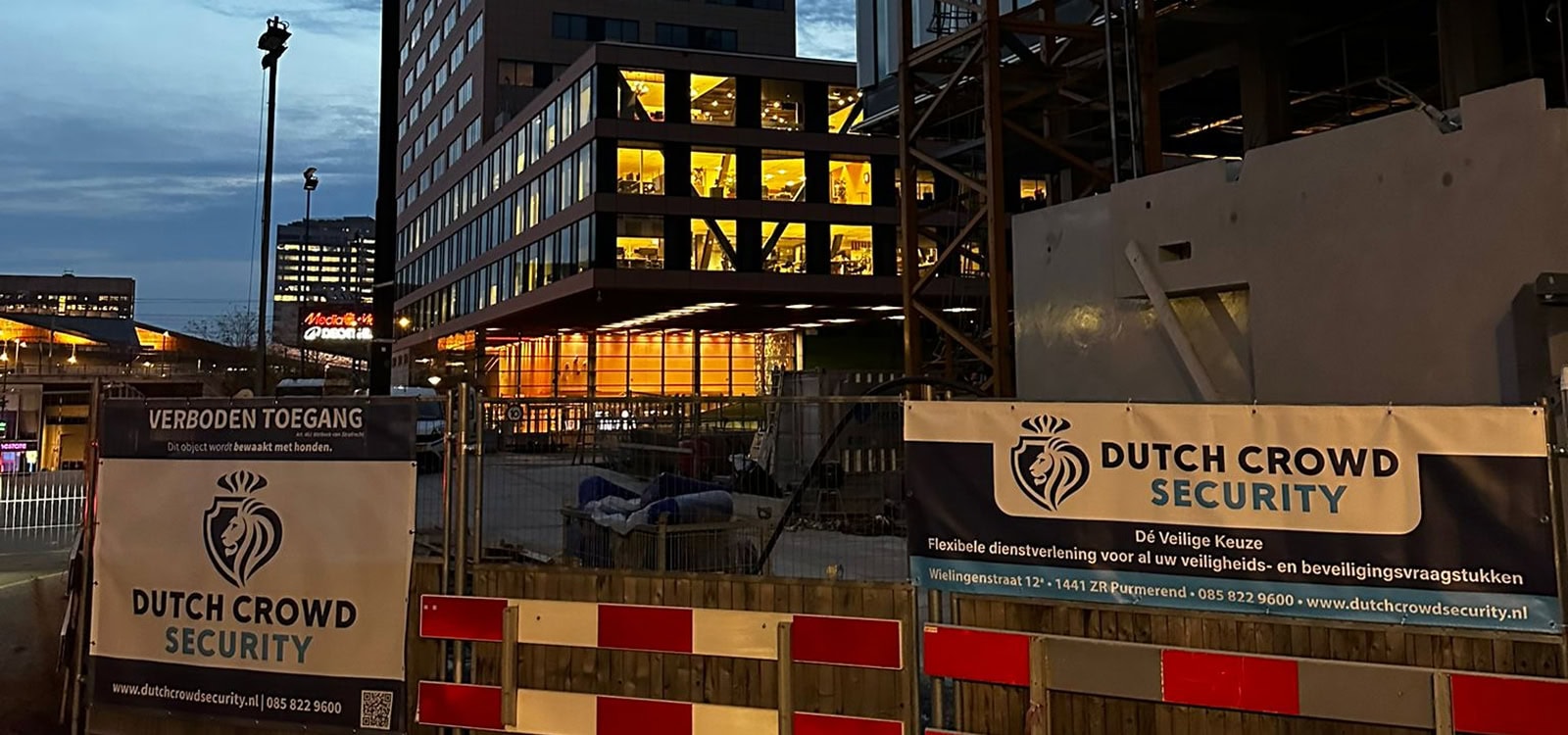
Construction theft causes annual damage in the Dutch construction sector. But the amount on the insurance application rarely covers the actual damage. Stolen materials can be replaced. The delay, replanning, fines and pressure from the client is a lot more difficult.
Those who look seriously at the cost of theft on a construction site do not look at one invoice, but at a chain reaction that often works for weeks. Then the demand quickly changes from security costs to money costs to what costs us if we don’t arrange it?
Why are construction sites so attractive for theft?
A construction site combines exactly what an intruder is looking for. Valuable materials, limited supervision and an environment that constantly changes. Staff are changing, access points are shifting, and it is not always clear who is supposed to be on the premises outside working hours. In the evening, weekends and during holidays, a site is often quiet. The fences are there, but rarely form a real barrier. In addition, construction theft is increasingly targeted and organised. Groups know at which stage of a project the most value is present.
What direct costs arise after a theft?
The first damage is clear. What’s gone must be replaced. Think of aggregates, tools, copper wire or complete lots of installation material. This may range from several thousand to tens of thousands of euros per incident.
The additional costs will be added immediately. Damaged gates, barriers or locks must be repaired or replaced. Material that is missing must be re-ordered, often as an emergency delivery and at extra cost. Then there is the own risk of insurance, which is often considerable in construction. And someone has to file a report, fill out damages forms and guide the claim. Hours that are nowhere in the budget.
Some stolen items are also excluded from the insurance coverage, or are difficult to specify if the records at the site are not in order. That makes the direct damage greater than it looks like paper.
Which hidden costs are most often underestimated?
This is where the actual account is drawn up. The direct damage is rarely the biggest problem. The indirect consequences are.
If materials are gone or damaged, the work stops. Sometimes half a day, sometimes several days. Shifts waiting for material supplies cost money without building anything. A project leader who has to change his planning, subcontractors who change their schedule, an execution service that takes stock of the damage. Those are hours that are nowhere in the budget.
On a large project, dozens of parties work together. A delay in theft doesn’t just affect the main contractor. It moves to installers, tile makers, painters and anyone who is scheduled to be there afterwards.
Many construction contracts contain penalty clauses in case of delayed delivery. A night-time theft leading to two weeks walk can result in a fine of tens of thousands of euros, on top of material damage. Well, that’s unrelated to what the insurance pays.
What does one incident in euro debt instruments mean?
A medium-sized construction project as an example makes it concrete. In the final phase, they break in at night. Installation material disappears, access is forcedly broken open and a container gets damaged.
A possible breakdown of costs: stolen materials and tools €30,000, construction delay of 48 hours €35,000, extra bet and replanning €12,500. Total actual damage: approximately €77,500. On larger or more complex projects, this amount may be significantly higher.
The insurance covers part of it. The rest will be borne by the project. And this is one incident, one night.
How do you calculate the real ROI of building security?
The math is simpler than he looks. You need two variables: the probability of an incident and the average damage per incident.
Suppose the probability of one incident per quarter is realistic for an unguarded construction site in an urban environment. And the average damage, including hidden costs, is between €30,000 and €75,000. This means an annual risk amount of €120,000 to €300,000 on a single project.
Put an investment in security against that. Think of a firm commitment of monitoring or overnight security, depending on project and risk.
Security is no guarantee that nothing ever goes wrong. But a security officer on location, visible and active, drastically reduces the risk of an incident. Intruders pick the easiest target. A guarded area isn’t.
When does security get back the fastest?
Not every project carries the same risk. But there are times when vulnerability is significantly higher than average.
In the final phase of a project, the most value lies on the ground. Installation equipment, plumbing, window frames and finished parts await installation. Exactly the stuff that’s easy to take and quick to sell. Those who have not yet secured security take a risk that is disproportionate to the investment required.
Weekends and holidays are the moments when most incidents occur. The terrain is still, there is no occupation and less supervision.
Transitional moments are often overlooked. If a contractor completes his work and the next party has not yet started, a gap will arise. The terrain is technically nobody’s responsibility and a construction site that looks equally deserted attracts attention from people who keep that kind of detail.
For data centre construction and other high-quality projects, the material value per square meter is exceptionally high. Copper wire, switch cabinets and server infrastructure are sought after and can be sold quickly. The damage in one targeted theft at this type of location regularly amounts to six digits. Especially at this type of location, it pays to switch on security from day one.
What measures have been shown to have an effect?
A chain is as strong as its weakest link. Camera footage is useful for ex-post detection, but on-site patrols can actually intervene. Depending on the project, a combination of measures has the best effect.
Access control controls who’s on site and who’s not. This can be done through identity check at the gate, barrier management and registration of visitors and suppliers. A visible security officer running rounds keeps the overview and deters organised groups.
CCTV monitoring works best if someone’s watching. Images without monitoring are evidence afterwards. Images that are viewed live and monitored directly by derogation are preventive. In areas with high material value or an increased risk profile, overnight security is included. In large, hard to see locations, security dog patrols offers an additional advantage: dogs detect earlier, react faster and have a deterrent effect.
How do you handle building security professionally?
Good building security doesn’t start the day something was stolen. It starts at the start of the project, with a risk analysis per construction phase. As a project progresses and the material value increases, the security scales along. This calls for a party that directs, maintains the overview and can adjust quickly if the situation changes.
Dutch Crowd Security always works as the lead contractor. This means one responsible party, one point of contact and a security plan that fits your project, from construction start to completion. Security officers with BHV and first aid degrees, also available as fire watch, accessible day and night.
Do you want to know what building security costs for your project? Contact or directly request a quote from.